
Virtual Try-On by Body Type: Does It Work for Every Shopper?
By Divine Eyo · · 6 min read
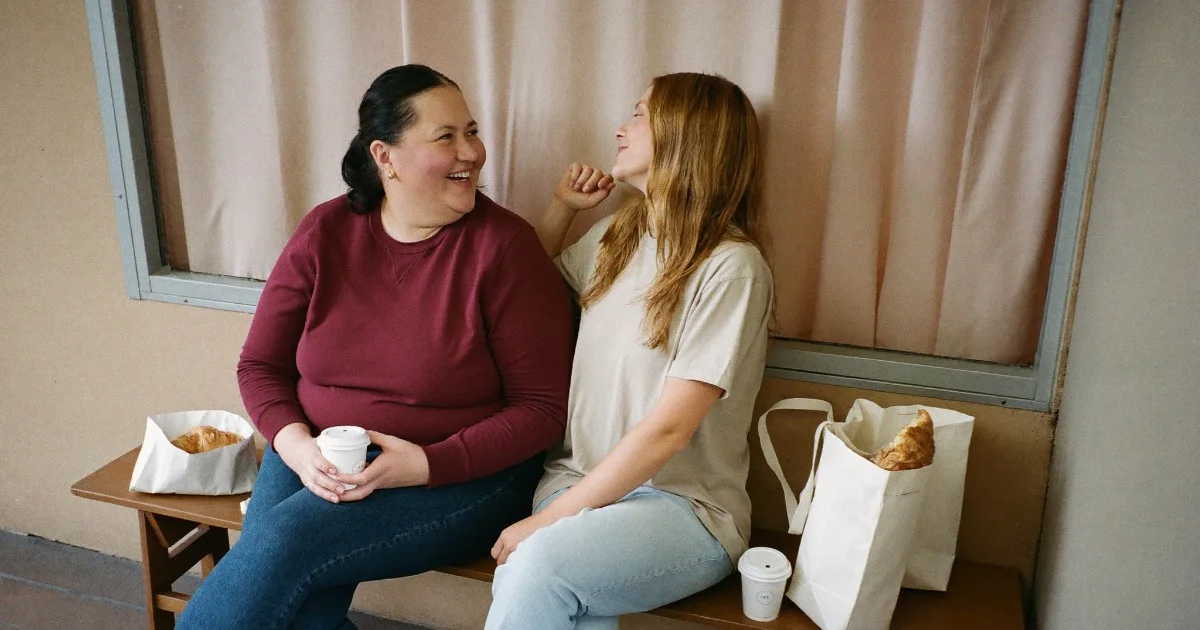
The short answer: yes, when the try-on is built on the shopper's own photo. Photo-based virtual try-on shows the garment on her body, not on a model or a generic avatar, so the result reflects her shape, height and proportions. The thing to verify before you sign with any vendor is that it holds up across the full range of bodies your customers actually have, not just the one on your product page.
Why does body type matter so much for virtual try-on?
Because the whole point of try-on is to answer a question your product photos cannot: "what will this look like on me?"
Most fashion e-commerce still answers that question with one model, one size and one pose. Google's own research with Ipsos found that 42% of online shoppers do not feel represented by images of models, and 59% have been dissatisfied with something they bought online because it looked different on them than they expected.
That gap is where a lot of returns come from. In PowerReviews' 2023 survey of 25,452 US consumers, 28% said they returned apparel because the item did not look the way they thought it would, and 53% of people who had bought clothing in the previous 90 days had made a return. The National Retail Federation and Happy Returns put the overall cost at $849.9 billion of merchandise returned in 2025, with an estimated 19.3% of online sales going back.
A shopper who does not see herself in your imagery has two options: guess, or leave. Try-on gives her a third one.
Does showing clothes on different bodies actually change buying behaviour?
The academic evidence says it does, and in the direction brands want.
A 2024 study in the Journal of the Academy of Marketing Science by researchers at the University of Bath, the University of Groningen and Vrije Universiteit Amsterdam found that showing garments only on thin models made it harder for shoppers of other sizes to judge fit, and those shoppers disengaged. Showing the same garment on a model of the shopper's own size did not hurt purchase decisions in any of their studies. The authors' ideal was every item shown on models of various sizes, which is expensive to shoot and rarely done.
Virtual try-on takes that ideal to its logical end. Instead of a handful of model sizes, the "model" is the shopper. When Google launched try-on in Shopping in 2023, it did so with real people ranging from XXS to 4XL across skin tones, body shapes, ethnicities and hair types. The industry has already accepted that one body is not enough. The question for a brand is whether the tool you pick lives up to that.
What should a brand expect try-on to do across body types?
Photo-based try-on, the kind Spequlo puts on your product pages, works from a photo the shopper uploads. A good result should:
- Keep her proportions. Shoulders, waist, hips and height should look like hers, not like the model's.
- Drape the garment on her shape rather than pasting a flat cut-out over the photo. A wrap dress should wrap; a boxy knit should sit boxy.
- Treat every body the same way. A size 20 shopper should get the same quality of result as a size 6 shopper, in the same amount of time.
- Work from an ordinary photo. A mirror selfie in a hallway, not a studio shot.
If a vendor's demo only ever shows one slim, tall figure, that is not an accident. Ask to see the rest.
What does virtual try-on not do?
This is where brands get burned, so it is worth being blunt.
Try-on shows how a garment looks on her body. It does not tell her which size to order. Those are two different problems. If 39% of returns come from sizing, as PowerReviews found, a visual tool will not fix that number on its own, and a vendor who implies it will is overselling. We covered the distinction properly in virtual try-on vs size recommendation.
What try-on does fix is the other large bucket: "it did not look how I expected." Colour against her skin, length against her legs, how a neckline sits, whether a print overwhelms or flatters. Those are the judgments a shopper makes in a changing room in about four seconds, and the ones she cannot make from a model photo of someone who looks nothing like her.
How do you test a try-on tool for body-type coverage before you sign?
Run the five-photo test. Before you commit to any vendor, including us, gather five real photos that reflect your customer base. Not models. Real customers, staff, friends, with their permission.
- Pick five people who differ in size, height and shape. If you carry an extended range, at least two should be in it.
- Have each take one ordinary phone photo, full length, decent light, plain background optional.
- Run the same three garments through the tool for all five: your bestseller, your hardest-to-photograph piece (a bias-cut dress, a chunky knit) and something fitted.
- Compare the fifteen results side by side. Look for distorted limbs, garments that float off the body, and any photo the tool refused or quietly cropped.
- Show the results to the five people. Ask one question: "does this look like you wearing it?"
If the answers are a clean yes across all five, you have a tool worth measuring properly. If they are only a yes for the two slimmest photos, you have a demo, not a product. Our holdout method post explains how to turn that into a real conversion test.
Which brands benefit most from try-on across body types?
Any brand whose customers do not look like its models, which is most of them. A few cases stand out:
- Dress brands, where silhouette is the whole purchase decision and a fit-and-flare reads completely differently across shapes. See try-on for dress brands.
- Size-inclusive and extended-range labels, whose customers have been told "imagine it on you" for years and are tired of imagining.
- Boutiques and small labels that cannot afford a reshoot on multiple model sizes for every drop. Try-on gives every shopper her own model for the price of a photo upload.
- Knitwear and occasionwear, where volume and drape are hard to read from a flat image.
If you are weighing vendors, our comparison pages lay out the differences with public facts only.
Where does this leave a brand buyer?
Treat body-type coverage as a pass-fail gate, not a nice-to-have. A try-on tool that works beautifully on one body and badly on three others will produce confident purchases from the first shopper and returns from the rest, which is roughly the problem you were trying to solve.
The cheapest way to find out is to upload a photo of yourself. Try the shopper experience at spequlo.com/try, then send the link to the colleague whose body looks least like yours.
FAQ
Does virtual try-on work for plus-size shoppers?
Photo-based try-on works from the shopper's own photo, so a plus-size shopper sees the garment on her own body rather than on a straight-size model. Whether a specific tool does this well is exactly what the five-photo test above is for.
Is virtual try-on the same as size recommendation?
No. Try-on shows how a garment looks on the shopper. Size recommendation tells her which size to order. Spequlo is a visualization layer; it does the first, not the second, and we think brands should be clear about that with shoppers too.
Do shoppers need to be a specific height or shape for try-on to work?
No. The tool should work from an ordinary full-length photo of anyone. If a vendor lists restrictions on who can use it, ask why.
Can try-on replace shooting products on multiple model sizes?
It does not replace good product photography, but it removes the ceiling on it. You can only shoot so many model sizes; try-on lets each shopper see the garment on the one body that matters to her decision.